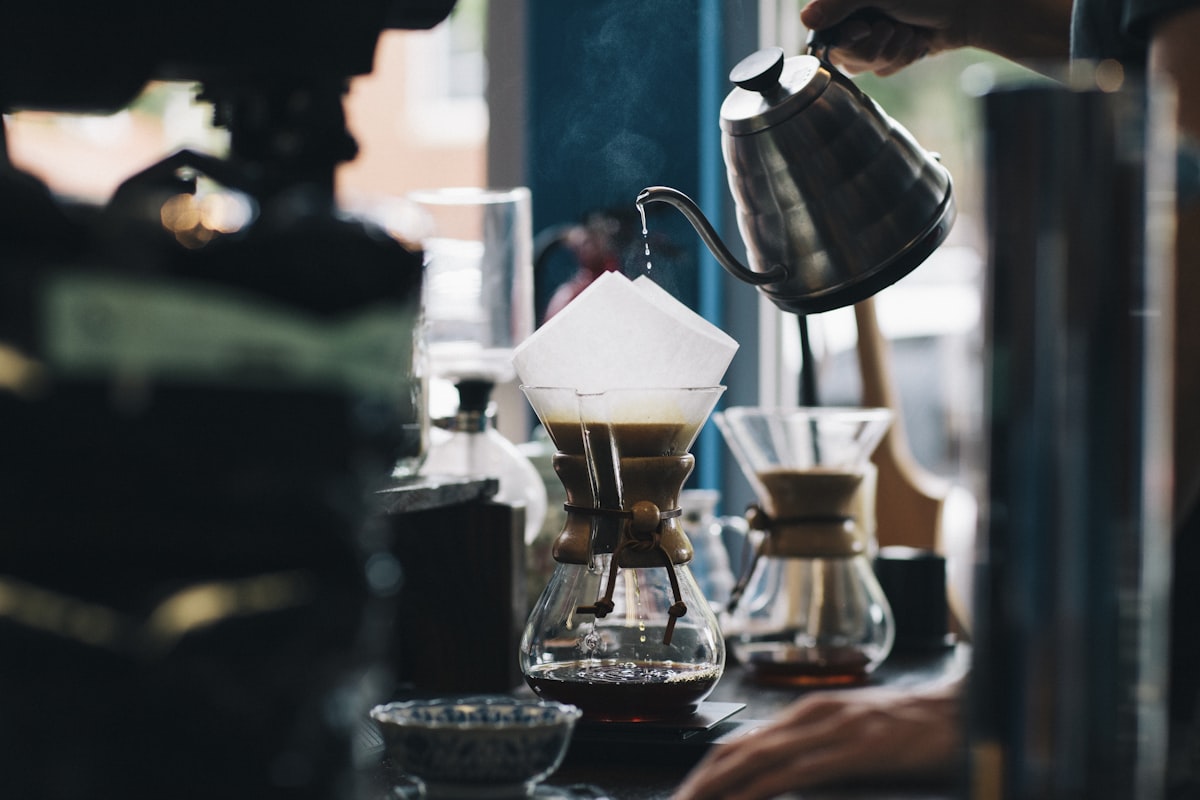
How to Fix Your Coffee — Ratio Adjustments for Every Brew
Your coffee tastes watery, bitter, sour, or just flat, and you've got no idea why. You're using the same beans, the same method, the same mug, and yet every cup is a lottery. The good news is that most coffee problems come down to one thing: the ratio of coffee to water. Get that right, and everything else falls into place.
This guide breaks down the five most common coffee problems, explains what's causing each one, and gives you the exact ratio adjustment to fix it. Whether you brew with a French press, an AeroPress, a Chemex, or a drip machine, the principles are the same.
The Starting Point: 1:16
The coffee world's default ratio is 1:16, meaning 1 gram of coffee for every 16 grams (or millilitres) of water. For a standard 250ml mug, that means about 15-16g of coffee. If you're using a Timemore C2 grinder, two full scoops of the built-in scoop is roughly 15g, but a coffee scale removes all the guesswork.
1:16 is the safe middle ground. But it's not the only ratio that works. Most people prefer somewhere between 1:14 (stronger, more concentrated) and 1:18 (lighter, more tea-like). The key is knowing which direction to move when your coffee doesn't taste right.
Problem 1: Your Coffee Tastes Weak and Watery
The symptom: You take a sip and it tastes like coloured water. There's no body, no sweetness, just a vague coffee-ish impression that leaves you reaching for the milk jug.
The cause: Not enough coffee relative to water. You're either using too little coffee or too much water. This is the most common ratio problem, especially when people eye-ball measurements instead of weighing.
The fix: Move your ratio towards more coffee. Try 1:14 instead of 1:16. For a 250ml mug, that's 18g of coffee instead of 15-16g. If 1:14 still feels thin, go to 1:13 (about 19g per 250ml). Keep the water volume the same and just increase the coffee dose.
Pro tip: Don't reduce the water to make it stronger. That tricks your brain into thinking the coffee is concentrated, but it actually leads to over-extraction (see Problem 3). More coffee, same water, better result.
Problem 2: Your Coffee Tastes Harsh and Overpowering
The symptom: The coffee hits your tongue like a wall. It's aggressively strong, almost unpleasant, and you end up adding loads of milk just to make it drinkable.
The cause: Too much coffee relative to water. The opposite of Problem 1. You're overloading the ratio, pulling out more coffee solids than the water can balance.
The fix: Shift your ratio towards more water. Try 1:17 or 1:18 instead of 1:16. For 250ml of water, that's 14-15g of coffee. If you've been using a full 20g scoop, dropping to 15g will make a dramatic difference.
Alternative approach: If you like a strong-tasting coffee but don't want the harshness, keep the ratio at 1:14 but add a splash of hot water to the finished cup. This is essentially what an Americano does, and it preserves the sweetness while softening the bite.
Problem 3: Your Coffee Tastes Bitter
The symptom: The lingering taste after swallowing is bitter, dry, and unpleasant. Sometimes there's a burnt or ashy quality. This is the one that makes people blame the beans, but it's almost never the beans.
The cause: Over-extraction. The water has been in contact with the grounds too long, or the water was too hot, pulling out bitter compounds that should have stayed behind. This happens most with dark roasts brewed at boiling temperature.
The fix: Three adjustments work, and you only need one:
- Coarser grind: Larger particles slow down extraction. If you're grinding for espresso but brewing in a French press, that's your problem.
- Lower water temperature: Drop below 93C. Boiling water (100C) is too aggressive for most methods. A Fellow Stagg EKG kettle with temperature control removes the guesswork.
- Shorter brew time: In a French press, 4 minutes is standard, but if your coffee is bitter, try 3 minutes. In an AeroPress, press earlier.
The ratio angle: If you want to keep your current grind and time, try 1:17 instead of 1:16. The extra water dilutes the extracted compounds, softening the bitterness without changing your technique.
Problem 4: Your Coffee Tastes Sour
The symptom: The coffee has a sharp, acidic edge. It tastes thin and underdeveloped, like something's missing. Sometimes people describe it as "roasty" or "grassy."
The cause: Under-extraction. The water didn't spend enough time with the grounds, or wasn't hot enough to dissolve the desirable flavour compounds. This is common with light roasts, which need more heat and time to open up.
The fix: The opposite of Problem 3:
- Finer grind: Smaller particles extract faster and more evenly.
- Higher water temperature: Use water between 92-96C. Never below 90C unless you're making cold brew.
- Longer brew time: In a French press, go to 5-6 minutes. In a pour over, pour more slowly.
The ratio angle: Try 1:15 instead of 1:16. A tighter ratio gives the water more coffee to work with, which helps pull out the flavours that make coffee taste sweet and balanced.
Problem 5: Your Coffee Tastes Flat and Boring
The symptom: The coffee isn't bad, exactly, but it's not exciting either. It's just... coffee. No sweetness, no complexity, no aftertaste. It exists but doesn't make you think about it.
The cause: Usually stale beans or water that's too cold. Old coffee (more than 3-4 weeks off roast) loses the volatile compounds that give it character. Cold water can't extract those compounds even if the beans are fresh.
The fix:
- Fresh beans: Buy smaller bags more frequently. If your beans have been open for more than two weeks, the ratio adjustments below won't help much.
- Water temperature: Make sure your water is 92-96C. If you're boiling the kettle and waiting, it drops fast. A temperature-controlled kettle holds the right temperature.
- Ratio sweet spot: For flat-tasting coffee, try 1:15 with a medium grind. This tight ratio concentrates the flavours that are there and gives you a more engaging cup.
Method-by-Method Quick Reference
Here are the standard ratios for each brewing method, plus the direction to move if something tastes off.
French Press
- Standard: 1:15 (60g coffee per 900ml water), 4-minute steep
- Tastes bitter? Coarsen the grind, reduce to 3 minutes, or move to 1:16
- Tastes sour? Use a finer grind, extend to 5-6 minutes, or move to 1:14
- Tastes weak? Increase to 1:13 or add more coffee at the same ratio
AeroPress
- Standard: 1:16 (15g coffee to 240ml water), 60-second steep, press for 20-30 seconds
- Tastes bitter? Drop water temperature to 80-85C (especially for dark roasts)
- Tastes sour? Use water at 90-93C and stir for 15 seconds instead of 10
- Tastes weak? Try 1:14 (18g coffee to 250ml water) for a more concentrated brew
Pour Over (V60 / Chemex)
- Standard: 1:16 for V60 (15g to 240ml), 1:17 for Chemex (15g to 255ml, the thicker filter absorbs some oils)
- Tastes bitter? Pour faster to reduce contact time, or coarsen the grind slightly
- Tastes sour? Pour slower with a gooseneck kettle for more even extraction, or use a finer grind
- Tastes flat? Try 1:15 with a medium-fine grind and water at 93C
Drip Coffee Machine
- Standard: 1:16 to 1:17 (follow your machine's scoop guide, but weigh if possible)
- Tastes bitter? Use a medium grind instead of fine, or run a cleaning cycle, mineral buildup slows water flow and increases contact time
- Tastes sour? Use a slightly finer grind or add an extra scoop per carafe
- Tastes watery? Most drip machines run cool. Pre-heat the carafe with boiling water before brewing, and use the "bold" setting if your machine has one
Espresso
- Standard: 1:2 ratio (18g in, 36g out), 25-30 second extraction
- Tastes bitter? Coarsen the grind or reduce the yield (pull less espresso)
- Tastes sour? Finer grind or longer extraction time
- Tastes watery? Increase the dose (try 20g in) or reduce the yield to 30g out for a more ristretto-style shot
The Ratio Cheat Sheet
Memorise these three numbers and you can fix any coffee:
- 1:13 to 1:14 = strong, concentrated, bold. Good for black coffee drinkers who like intensity.
- 1:15 to 1:16 = balanced, the standard starting point. Works for most people and most methods.
- 1:17 to 1:18 = light, clean, tea-like. Good for lighter roasts and people who drink black coffee with milk.
Move one step at a time. If 1:16 tastes weak, try 1:15 before jumping to 1:13. Small adjustments compound, and you'll find your sweet spot faster.
Why a Scale Changes Everything
A coffee scale with timer is the single most impactful accessory for home brewing. Without one, you're guessing at both the coffee dose and the water volume. A kitchen scoop gives you roughly 7-8g per level scoop, but "level" is subjective, and heaps vary wildly.
A scale costs £15-25 and eliminates the most common source of bad coffee. If you're going to invest in one piece of gear, make it this one. The Timemore C2 grinder is the second priority, then a temperature-controlled kettle.
The workflow is simple: weigh your coffee, zero the scale, pour water until you hit the target weight, start the timer. That's it. No more guessing, no more inconsistency, no more bad cups.
☕ Products Mentioned in This Guide
- AeroPress Original Coffee Maker, Versatile manual brewer, forgiving on ratios
- Chemex Classic 6-Cup Pour-Over, Clean, bright pour-over with thick bonded filters
- Hario V60 Drip Decanter, The classic pour-over dripper for flavour clarity
- Fellow Stagg EKG Electric Gooseneck Kettle, Temperature-controlled for precision brewing
- Timemore Chestnut C2 Manual Grinder, Consistent burr grind at an affordable price
- Coffee Scale with Timer, Weigh your dose and time your extraction
Read our full coffee to water ratio cheat sheet for a printable quick reference of every method.

Sam Roberts writes about coffee machines, beans and brewing gear for Coffee Nerds. He's been comparing coffee products for UK readers since 2024.
As an Amazon Associate we earn from qualifying purchases.