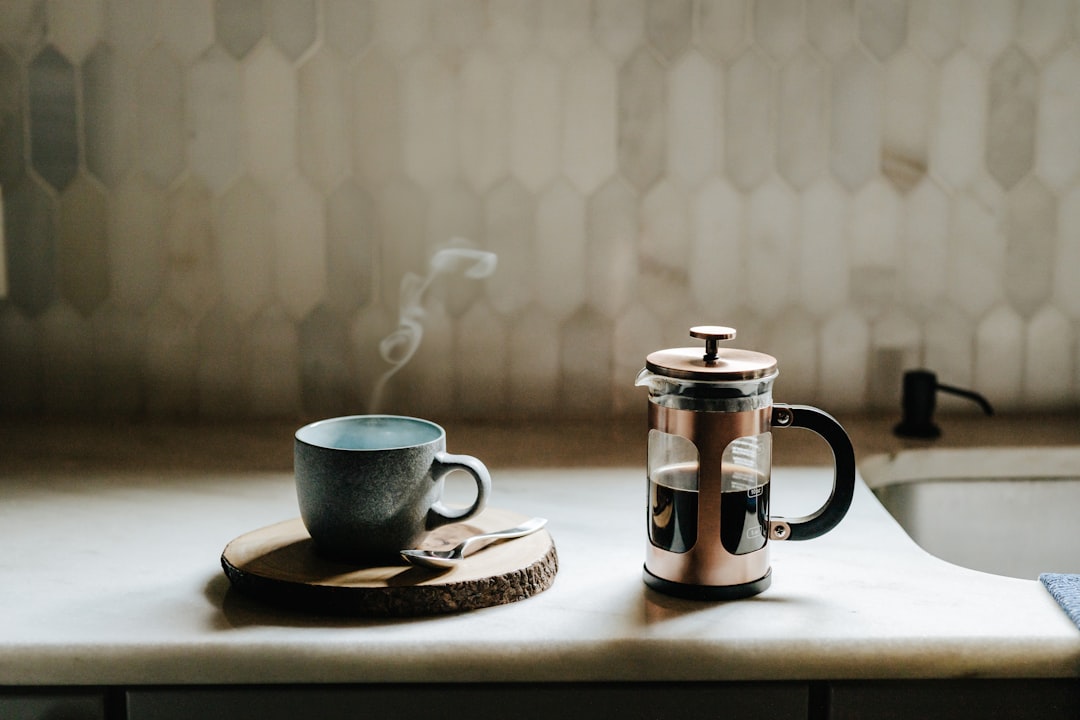
French Press Coffee: 6 Questions Answered
- Use a 1:15 ratio: 30g of coffee to 450ml of water. A full 8-cup Bodum Chambord takes 65-70g.
- Grind coarse, about the size of sea salt. A Timemore Chestnut C2 manual grinder makes it easy to hit the right size.
- Steep for four minutes, no longer. Over-steeping is the most common cause of bitter cafetiere coffee.
- Use water at 92-96C rather than a rolling boil to keep the cup clean and sweet.
- Clean every part after each brew and store beans in an airtight Fellow Atmos canister so stale oils never build up.
Related reading: Best Cafetiere (French Press) Guide UK · Best Coffee Beans for French Press UK · Coffee Brewing Ratios Guide
Got a French press gathering dust because your coffee comes out bitter, weak or full of grit? You're not alone. The cafetiere is one of the most forgiving brewers in the kitchen, but the details matter. The short version: use a 1:15 coffee to water ratio, a coarse grind, water at 92-96C and a four-minute steep, and you'll get a cup that beats most cafés. Here are the six questions UK coffee drinkers ask most, answered directly.
Question 1: How Much Coffee Per Cup in a French Press?
Use a 1:15 coffee to water ratio, the standard recommended by the Specialty Coffee Association. That's 30g of coffee to 450ml of water, which makes two generous mugs. For a full 8-cup press like the Bodum Chambord, which holds about a litre, you want 65-70g of coffee.
Weighing beats scooping every time. A heaped tablespoon of whole beans weighs anywhere from 8-12g depending on the roast, so scoops drift by 30% or more. If you don't have scales, the Maestri House S2 coffee scale with timer makes dosing repeatable, but any kitchen scale works. Prefer a stronger cup? Move toward 1:14. Want it milder? 1:16. The ratio is a starting point, not a law.
Question 2: What Grind Size Should I Use for French Press Coffee?
Coarse, about the size of sea salt crystals. The mesh filter in a French press is much coarser than paper, so anything finer than coarse pushes sediment into your cup and extracts bitter compounds faster. Pre-ground "cafetiere" coffee from the supermarket is usually close enough, but grinding whole beans fresh gives you more control and a brighter cup.
A burr grinder matters more here than for any other brewer. Blade grinders shatter beans into a mix of dust and boulders, which means some of your coffee over-extracts while the rest stays weak. The De'Longhi KG79 is a budget-friendly electric burr option, the Timemore Chestnut C2 is the manual pick, and the Baratza Encore ESP is the upgrade that handles espresso too. See our best coffee grinders UK guide for the full comparison.
Question 3: Why Does My French Press Coffee Taste Bitter?
Bitterness almost always comes from one of three mistakes: water too hot, steeping too long, or a grind too fine. Boiling water scalds the grounds and pulls harsh, ashy flavours out in the first minute. Let the kettle sit for 30-60 seconds after it boils, or heat water to 92-96C if your kettle has a temperature setting.
Steeping past four minutes also drives bitterness, because the extraction keeps going the whole time the water sits with the grounds. And if your grind is fine, the coffee over-extracts even faster. Fix all three and the bitterness usually disappears. If it's still harsh, the beans themselves may be roasted too dark for your taste, or they may be stale.
Question 4: How Long Should Coffee Steep in a French Press?
Four minutes total. Here's the routine: add your ground coffee, pour in the water, give it a gentle stir, then put the lid on and wait four minutes. Less time and the cup comes out sour and thin, because the water hasn't pulled enough flavour out. More time and the bitter compounds take over.
When the timer hits four minutes, press the plunger down slowly and steadily, then pour immediately. Leaving the coffee sitting on the grounds after pressing keeps it extracting, so a press left half full turns bitter within ten minutes. Pour what you need and transfer the rest to a thermos if you want to nurse it.
Question 5: Does French Press Coffee Have More Caffeine?
Usually, yes. Two things push cafetiere coffee to the higher end of the caffeine range. First, immersion brewing keeps water in contact with the grounds for minutes rather than the seconds a drip machine uses, so more caffeine dissolves. Second, the metal mesh filter lets fine coffee particles through, and those particles carry caffeine with them. Food composition databases list a typical 250ml cafetiere cup at roughly 100-140mg of caffeine, compared with around 80-110mg for the same size filter cup.
The dose matters more than the brewer though. A double espresso at 60-70mg in a tiny cup is far more concentrated than a full cafetiere mug. If you're sensitive to caffeine, stick to one cup in the morning or switch to a Lavazza Caffè Decaffeinato bean for the afternoon.
Question 6: How Do You Clean a French Press Properly?
Take it apart after every brew. The plunger assembly unscrews into a stem, mesh discs and a spring, and old coffee oils collect between them and turn rancid, which makes the next brew taste stale. Rinse every part under warm water, wash the glass with washing-up liquid, and let the pieces dry separately.
Once a week, give the mesh a deeper clean. A soft brush shifts the oils a rinse misses, and if you use your press daily, a monthly soak in a descaler keeps the mesh clear. One habit that helps before the brew even starts: store your beans somewhere airtight rather than in the bag. The Fellow Atmos vacuum canister pulls air out every time you close it, which keeps beans fresher for weeks.
Frequently Asked Questions
Final Verdict
The French press is the cheapest way to serious coffee in your kitchen. A solid press costs under £30, the technique takes one cup to learn, and the ratio plus grind plus timing rule above gets you 90% of the way to café quality. If you're starting from zero, grab the Bodum Brazil for budget brewing, pair it with a coarse-ground bag of Union Original Blend, and add a grinder when you're ready to level up.
- Bodum Chambord 12 Cup - the classic 1 litre press. Read our full cafetiere guide
- Bodum Brazil 8 Cup - budget pick that brews well
- La Cafetière Pisa 8 Cup - double-wall steel that keeps coffee hot
- ESPRO P7 - insulated press with a fine-mesh filter
- Timemore Chestnut C2 - manual burr grinder, great for coarse
- De'Longhi KG79 - budget electric burr grinder
- Baratza Encore ESP - grinder upgrade for espresso later
- Maestri House S2 coffee scale - dose by weight, not scoop
- Fellow Atmos canister - vacuum storage for beans
- Union Original Blend - versatile medium roast for daily brews
- Lavazza Qualità Oro - smooth Italian classic
- Coffee Masters Colombian Organic - bright, fruity single origin
- Quarter Horse Dark Horse - bold chocolatey option

Sam writes about coffee for Coffee Nerds - machines, grinders, beans and brewing gear for UK coffee lovers. He keeps the nerdy details practical.
As an Amazon Associate we earn from qualifying purchases.
Last reviewed: August 19, 2026 · Evidence-based content · Contains affiliate links